
Imbolc shona daoibh!
Happy Imbolc to you all!
Not too sure what Imbolc is?
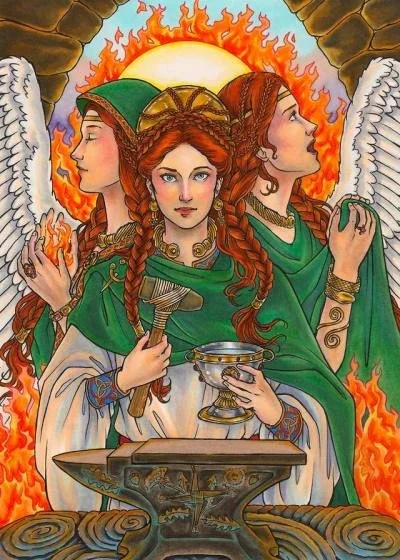
St Brigid; also known as the Triple Faced Goddess and one of Ireland’s patron saints
Imbolc, taking place annually on February 1st, is an ancient pagan festival still celebrated in Celtic cultures today, and is also known as St Brigid's Day. The purpose of this festival was to mark the halfway point between solstices, as part of the neopagan calendar, and to encourage a lively spring!
This festival, in Ireland in particular, is closely tied to the saint and goddess, St Brigid. Known as the triple-faced goddess, Brigid is believed to be the goddess of fertility, healing, poetry, prophecy, fire, and even the smithing forge. Her acclaim as this goddess made her the perfect figure head for the festival of Imbolc, where ancient Celts and people alike today hope to see a vibrant, healthy spring.
Why is it on February 1st if it’s about the spring?
Though it occurs on February 1, this wintry festival occurs to mark the coming of the spring and as one of the halfway points between solstices. It’s one of eight festivals that make up the neopagan calendar. Half of which are similar to Imbolc, in that they celebrate reaching midway period.
How is Imbolc celebrated today? What are some of the rituals of St Brigid’s Day?
Imbolc is one of the four fire festivals of the eight pagan festivals each year. Though it's technically a "fire festival", its traditions are not specifically about fire. You can weave a traditional St Brigid's cross (pictured below), hang a cloak or cloth to be blessed by Brigid outside of your home, commit to a bit of spring cleaning, and/or spend time feasting to celebrate the coming of spring! Candles and bonfires are, naturally, also included. But these practices are ultimately all about revitalising you the same way Brigid will revitalise the land, and with that in mind, feeding the body is priority number one!
How is a Celtic goddess also a Christian saint?
Back in the early Christian days, the biggest goal of early priests was to add more sheep to the flock and spread the word far and wide. With this in mind, early Christianity — when interacting with Celtic cultures — often combined elements to prove that this new religion wasn't entirely foreign. Consider the Celtic crosses; the circle behind the traditional cross was an homage to the sun worshipping practice common to pagan and druidic beliefs. So, similarly, Brigid was swept into sainthood in early Christianity, as were many of the other Celtic festivals, figureheads, and traditions!
Where is Imbolc — or St Brigid’s Day — celebrated today?
Celtic cultures are still very much alive and well in different areas of the world, which means that Imbolc is celebrated in these regions too! But the areas where it is most commonly and traditionally celebrated are still Ireland, Scotland, and the Isle of Man; the origins of many a Celtic tradition. In Ireland, it's most commonly referred to as one of the island's patron saints, making it St Brigid's Day. However, in Scotland, it's more commonly known as Imbolc.
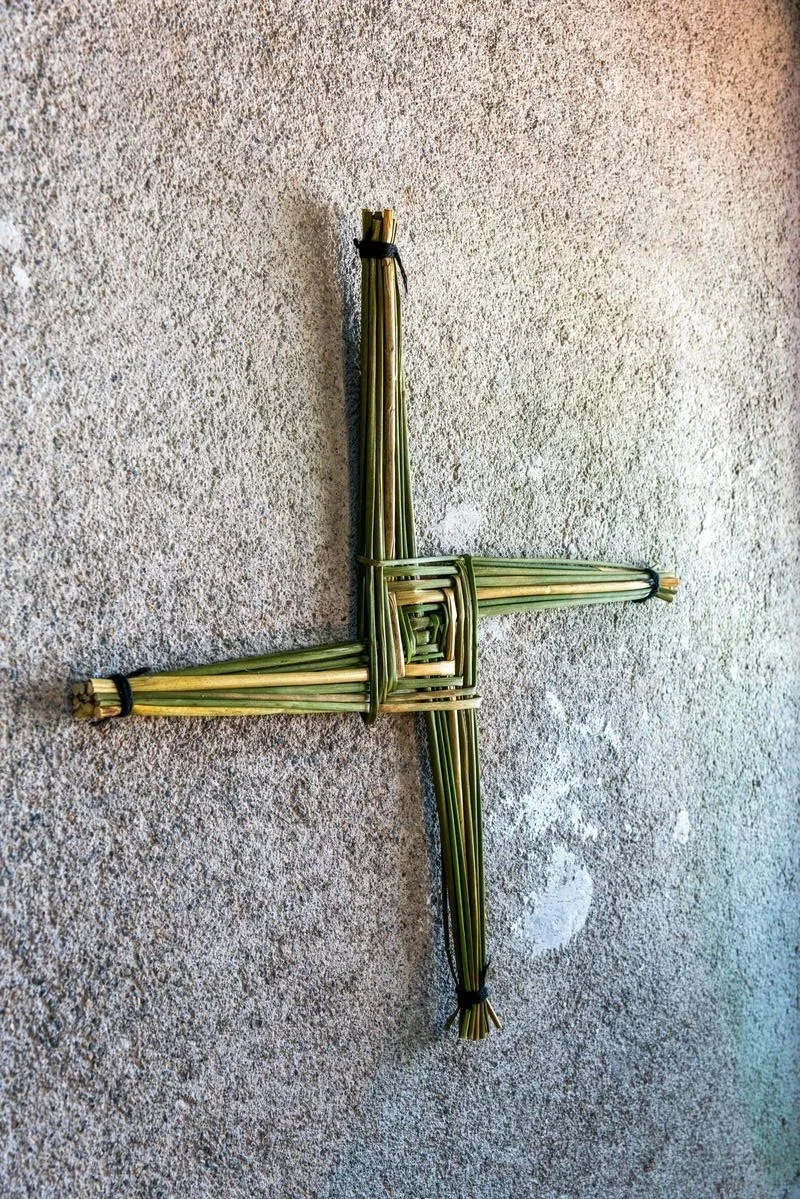
St Brigid’s cross! Learn to weave your own here!
How should I celebrate Imbolc today?
Attend an Imbolc festival in Ireland or Scotland! However, if you want to celebrate Imbolc, or St Brigid's Day, in your own way:
Dive into spring cleaning mode,
Light some candles,
Try out weaving some rushes,
And feast like the ancient Celts!
Or if you want to learn more about bringing your groups to Ireland during its traditional festivals, reach out anytime for a bespoke package!